

Hello Legal Eagles and Masters of the Fine Print,
Happy (almost) Thanksgiving — may your briefs be airtight and your in-laws tolerable.
Let's get into it! ⚖️😂
Or: How to Navigate November-December Without Becoming a Cautionary Tale at January's All-Hands Meeting
Congratulations, counselor. You've survived another year of impossible deadlines, terrible clients, and existential dread disguised as billable hour requirements. You've earned a break.
But first, you must survive the holidays.
That's right. Between now and January 2nd, you face a gauntlet of professional and familial landmines that make trial work look straightforward. You'll be expected to attend your firm's holiday party (where careers go to die), multiple family gatherings (where you'll be reminded why you became a lawyer to avoid becoming like your relatives), and various "optional but definitely mandatory" client appreciation events (where the clients appreciate free drinks more than your legal services).
The holidays are when attorneys make the kinds of mistakes that become firm legends. When "I had too much eggnog" becomes insufficient explanation for why you're now in HR's office explaining a viral TikTok. When your family group chat becomes Exhibit A in why you need therapy.
This guide exists to help you emerge from holiday season with your:
Let's begin with the battlefield that claims the most legal careers annually: The Firm Holiday Party.
The firm holiday party is a trap disguised as appreciation. It's "optional" the way responding to senior partner emails is "optional." It's your chance to "relax and celebrate" while being evaluated by people who determine your bonus, your partnership track, and whether you get assigned the toxic client in January.
The Golden Rule: This is work. This is ALWAYS work. That open bar is sponsored by people who will remember everything you do, even if you don't.
What Happens: Three martinis in, you corner a partner and finally tell them what you REALLY think about the firm's billing practices, that stupid case assignment, or how their "mentorship style" is actually just neglect with extra steps.
How It Starts: "You know what? I've been wanting to say this for months..."
How It Ends: Updating your LinkedIn profile in January and practicing the phrase "I'm exploring new opportunities."
Prevention Strategy:
Nuclear Option: Don't drink. Yes, people will ask why. Prepare a boring explanation: "Training for a half-marathon," "On antibiotics," or "Made a bet with my spouse." Nobody questions a bet.
What Happens: The associate from corporate who you've been making eye contact with during partner meetings looks really good under these tasteful string lights. That married senior counsel who's been emotionally available in all the wrong ways is finally talking to you without a case file between you. The young partner who's "separated" (they're not, they're just fighting) seems really interested in your thoughts about appellate procedure.
How It Starts: "We should grab coffee sometime and discuss that brief..."
How It Ends: HR investigation, ethics complaints, someone changing practice groups, or all three.
Prevention Strategy:
Warning Signs You're About to Become Firm Gossip:
Emergency Exit: Your Uber just arrived (it didn't, but leave anyway). Your cat is sick (you don't have a cat, this is fine). You have an early morning filing (on a Saturday, but commitment to billables is respectable).
What Happens: The DJ is playing that song from college. You've had enough champagne to believe you still have the moves from college. The crowd is encouraging you. Before you know it, you're demonstrating exactly how far professional dignity can fall in a three-minute song.
This includes but is not limited to:
How It Starts: "Hold my drink, I'm gonna show these kids how we did it at Penn State..."
How It Ends: A video in the firm's private Slack channel titled "Remember when [YOUR NAME] thought this was a good idea?"
Prevention Strategy:
Reality Check: You are not as good a dancer as you think you are. You're definitely not good enough to offset the professional cost of your managing partner watching you attempt the worm.
What Happens: You've had liquid courage and you're finally ready to pitch yourself to that rainmaker partner, corner the client you've been trying to impress, or hand out business cards like a Vegas promoter.
How It Starts: "I know this is a party, but I've been wanting to talk to you about..."
How It Ends: A reputation as someone who doesn't understand boundaries and treats social events like deposition prep.
Prevention Strategy:
Acceptable Work Talk:
Unacceptable Work Talk:
What Happens: You're having fun! Everyone should know! You start posting photos, stories, and maybe a few videos of your colleagues in various states of holiday cheer. You tag the firm. You use hashtags. You're essentially creating Exhibit A for any future employment dispute.
How It Starts: "This is going on my story!"
How It Ends: A meeting with the marketing department about "brand consistency" and an explanation to the partner who didn't consent to being in your Instagram story while holding their third old fashioned.
Prevention Strategy:
The Tag Rule: Never tag anyone without explicit permission. That includes the firm, partners, colleagues, and especially not clients who are also at the party.
It IS possible to have a good time without becoming a cautionary tale:
Do:
Don't:
The Optimal Strategy: Show up, be seen by the people who matter, have exactly 1.5 drinks spaced over 2 hours, make pleasant conversation about non-controversial topics, thank the hosts, and leave before anyone does anything regrettable. You've demonstrated you're a team player without demonstrating you need supervision.
You bill $400/hr. So why are you manually proofreading client emails and rewording "just checking in" for the 12th time?
Let MyCase IQ's AI Legal Writing Assistant do the mental heavy lifting:
Real talk: If your AI can handle first drafts, you can handle the stuff that actually needs a brain.
TRY MYCASE FREE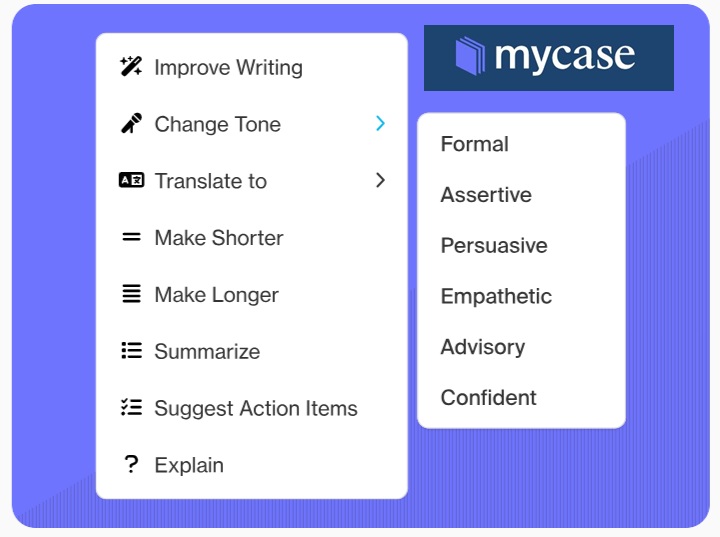
If you thought the firm party was challenging, welcome to the true test of your self-control: spending extended time with the people who knew you before you had a J.D. to hide behind.
Your family doesn't care about your billable hours. They care about:
The Challenge: Navigate multiple family gatherings across different holidays (Thanksgiving, Christmas, Hanukkah, New Year's) without becoming the family drama or the family disappointment.
Setup: You're three hours into Thanksgiving dinner. Your uncle has had four beers. Someone mentions literally anything happening in the news. You, a trained advocate with strong research skills and argumentation experience, decide this is the moment to deploy your powers.
What Happens:
Why This Happens: You spent all year arguing for a living. Your brain sees a bad argument and thinks "I can fix this with vigorous cross-examination and a detailed explanation of why they're wrong."
Your brain is WRONG.
Prevention Strategy:
Emergency Exits:
The Nuclear Option: Agree to disagree, and actually mean it. "Uncle Jim, we're not going to agree on this, and that's okay. Want to hear about the vacation I'm planning?"
Setup: It's been a year. Old grievances have fermented like wine. Someone brings up that thing from three years ago. Or ten years ago. Or from your childhood. The past is present, and you're apparently still responsible for something you did when you had a learner's permit.
Common Triggers:
Your Instinct: Defend yourself with the vigor of a closing argument. Present evidence. Cross-examine witnesses. Impeach their recollection. WIN THE CASE.
The Problem: Family relationships aren't trials. There's no judge to rule in your favor. There's no verdict that makes everyone move on. There's just ongoing hurt feelings and the next gathering.
Prevention Strategy:
Responses That Actually Work:
Remember: You can be right, or you can have a pleasant holiday. Choose wisely.
Setup: You're a lawyer. You're educated. You're "successful" (your student loans disagree, but family doesn't know that). This makes you the perfect target for your cousin/brother-in-law/uncle who just discovered cryptocurrency, AI investing, or a "business opportunity" that's "definitely not a pyramid scheme."
The Pitch:
Your Options:
Option A - Lawyer Mode: Explain in detail why this is a terrible idea, cite securities laws, discuss fraud indicators, and effectively give them a free consultation on why they're about to lose money.
Result: They're offended. You're "negative." They do it anyway and blame you when it fails because you "didn't warn them enough."
Option B - Polite Decline: "That's interesting, but I'm pretty risk-averse with my money. Good luck though!"
Result: They think you're boring but move on to the next target.
Option C - The Redirect: "I actually don't give financial advice, even to family. Have you talked to an actual financial advisor?"
Result: You're helpful without being involved. Perfect.
The Correct Answer: Option B or C, depending on how persistent they are.
What NOT to Do:
Why: When (not if) their venture fails, you'll be blamed. Either for not stopping them hard enough, or for helping them legally structure their disaster, or for not investing alongside them. There's no win here.
The Truth: Your relatives don't want actual legal analysis. They want validation. Deny them neither your expertise nor your money; simply redirect with kindness.
Setup: You're a lawyer. Your family has legal questions. You're family, so obviously this should be free. Right? RIGHT?
Common Requests:
The Problem:
Your Options:
For Simple Questions: Give general guidance, disclaim it's not legal advice, and tell them to consult a local attorney for their specific situation.
For Complex Issues: "This is outside my area. Let me refer you to someone who does this work." Then actually make the referral.
For Obviously Bad Ideas: "I can't help you sue your employer for not liking your personality. That's not illegal, that's just Tuesday."
What to Say:
What NOT to Say:
The Family Discount Reality: If you MUST help family, charge something. Even a token amount. Free advice is valued accordingly (not at all), and they'll respect you more if there's a transaction. Plus, it prevents the endless "just one more question" follow-ups.
Boundary Setting: "I love you, but I can't be your lawyer. Our relationship is too important to mix with legal services. Here's someone I trust."
Setup: Your family has wine. Or edibles. Or both. Inhibitions lower. Truths emerge. Feelings get shared. Nobody asked for this level of emotional transparency, but here we are.
What Happens:
Why This Happens:
Prevention Strategy:
If It's Already Happening:
The Morning After: If emotional bombs were dropped, address them briefly and kindly the next day. "About last night - I was speaking from a tired place. What I meant was..." or "Let's table that conversation for a better time."
Before You Arrive:
During the Gathering:
Safe Conversation Topics:
Topics to Avoid:
Exit Strategies:
Remember: You survived law school, the bar exam, and your first year of practice. You can survive a few hours with your family. Probably.
Meet Wati, your AI-powered assistant that handles client FAQs, schedules consults, and closes WhatsApp tickets instantly.
No burnout. No missed messages. No chaos.
You're not just saving time. You're reclaiming billable hours.
Try Wati for Support — built to help solo practitioners and small law firms stay responsive without being overwhelmed.
TRY NOW
You thought the firm party was stressful? Try entertaining clients while representing your firm's professional reputation and trying to ensure they renew their retainer agreement.
These events are triple threat danger zones:
The Core Truth: This is the most work-like social event you'll attend. Act accordingly.
Scenario: Your firm is taking important clients to an expensive steakhouse. You're there to "build relationships" (laugh at their jokes and subtly discourage them from hiring cheaper firms).
Rules of Engagement:
Do:
Don't:
The Partnership Evaluation: Everything you do at this dinner will be discussed Monday morning. Were you professional? Personable? Did you help land the client or make things awkward? Your bonus may depend on this meal.
Red Flags You're Messing Up:
Scenario: Your firm is hosting 100+ clients and referral sources for cocktails and hors d'oeuvres. You're expected to "work the room."
Strategy:
Conversation Formula:
Avoid:
If you've made it through the firm party, multiple family gatherings, and client events, there's one last test: New Year's Eve.
The Danger: This is the one night where societal expectations of excessive celebration collide with your professional obligations to not become a viral video.
Your Options:
Option A - The Low-Key Evening: Stay home or celebrate with close friends. Watch the ball drop on TV. No risk, no reward, no regret.
Option B - The Lawyer-Friendly Gathering: Attend an event with other legal professionals who understand that "what happens at the party" very much does NOT stay at the party in the age of social media.
Option C - The Wild Night: Go out with civilians who don't know your professional life. Maximum fun, maximum risk. Not recommended unless you trust everyone present to never have a phone.
Universal New Year's Rules:
The Midnight Kiss Clause: If you're single and someone at the party seems attractive, remember that alcohol and proximity don't equal genuine connection. If they're a colleague, see "Disaster #2: The Inappropriate Romance Initiative" above. If they're a stranger, get their number and text them when you're sober. If they're your ex, put down your phone and walk away.
The holiday season is a marathon, not a sprint. You don't have to be perfect at every event. You just have to be professional enough not to derail your career and likeable enough not to get uninvited from next year's gatherings.
Remember:
The Winning Strategy:
Final Wisdom: The attorneys who make partner aren't always the smartest or best lawyers. Often, they're just the ones who didn't become a cautionary tale at the holiday party. Be boring. Be professional. Be forgettable in the best way.
Your career will thank you. Your family might even miss you next year.
Motion to Survive the Holidays: GRANTED
Walter, Editor-in-Law
(Survived 15 holiday seasons without major incident. Mostly. That one year doesn't count.)
#1: This guide is satirical and not actual legal advice on avoiding career suicide or family estrangement. Legal LOLz is not responsible for any holiday disasters that occur despite reading this guide. We tried to help.
#2: If you DO become a cautionary tale this holiday season, please don't email us about it. We can't represent you, but we might write about you. Anonymously. Probably.
#3: All scenarios described are fictional composites. Any resemblance to your actual holiday disasters is coincidental but also hilarious. Please share them with us (anonymously) for next year's edition.
#4: Drinking responsibly is not just about your career, it's about your safety and everyone else's. Don't drive drunk. Don't let others drive drunk. Call an Uber. Bill it to "client development" if you must.
#5: If you're struggling with substance abuse, anxiety, or depression during the holidays (or anytime), please seek professional help. The lawyer assistance programs in your state are confidential and actually helpful. You're not alone, even though law firm culture makes it feel that way.
Share this guide with 3 colleagues who need it (everyone needs it) and 1 family member as a subtle hint about what NOT to bring up at dinner.
Happy Holidays, Counselors. May your gatherings be brief, your drinks be weak, and your stories be boring.

© 2025 All rights reserved. Sharing is cool. Stealing? That's a tort, not a tribute.